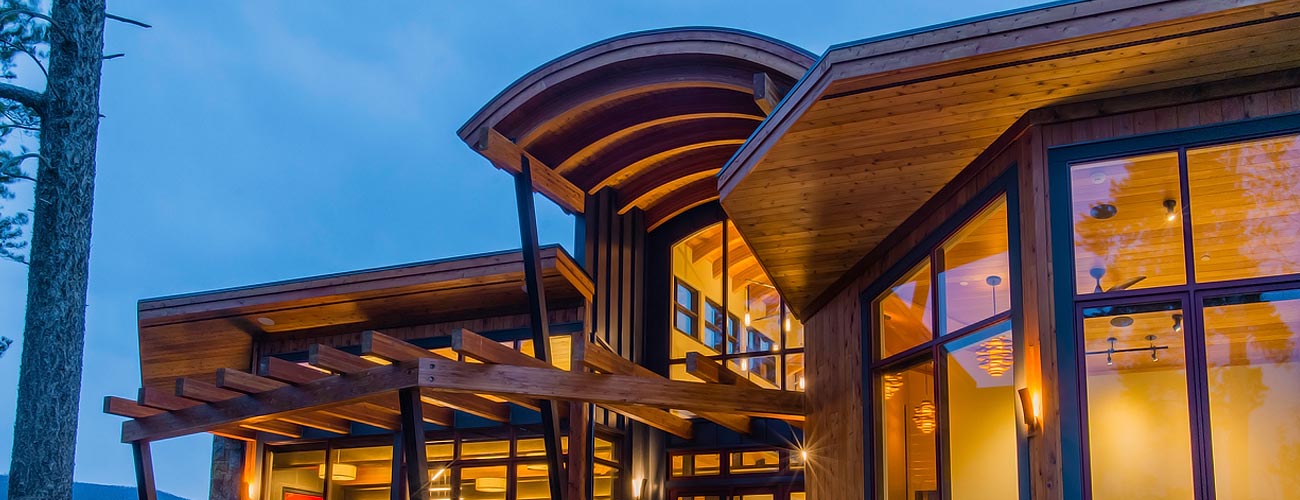
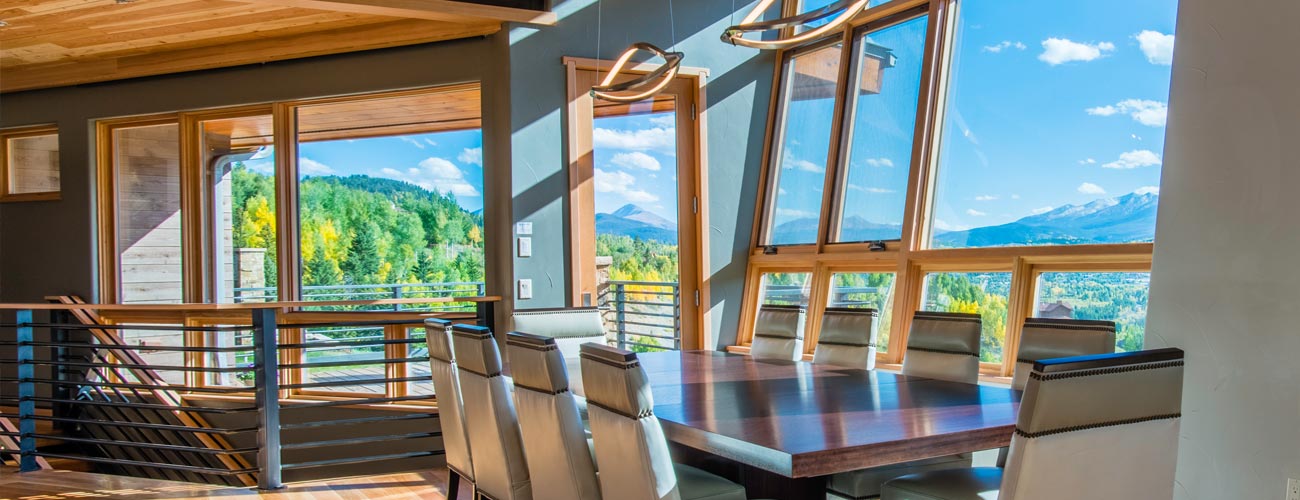
After Kyle M, a successful Colorado direct marketing business man became a father his perspective changed. Watching his children grow older and seeing the environmental challenges they would face, he began to learn all he could to convert his Colorado home from an energy hog to an energy miser. Kyle succeeded. He hired a Denver solar engineering firm to install a 10 kW solar photovoltaic array which reduced his electric bill by 75 percent. He put in a solar greenhouse which brings heated air into the home and doubles as a cozy family room. He switched out his light bulbs to compact fluorescent (CFLs) which use about 1⁄4 the energy of incandescent light bulbs. Perhaps most importantly he used technology to assist him and his family to make significant lifestyle changes to conserve energy. He learned that by programming simple occupancy sensor devices to turn lights off in key rooms after two minutes of no activity, he could dramatically reduce his energy usage – without the constant reminders  his family “… please turn the lights off when you leave the room!” Kyle set an even higher goal when he decided to buy a lot on Timber Trail Road to build a ski in/ski out mountain home in Breckenridge. This luxury Summit County house would be a net zero energy home. The goal was to design and build an 8,000 sq. ft. highly attractive mountain home that fit seamlessly into the existing neighborhood and whose renewable energy systems were well integrated into the overall house design. Over the following months, a skilled and committed team of professionals was brought together to achieve these goals. This is the first time in Summit County that a team of this depth and experience in environmental building and renewable energy solutions has been assembled.
Steamboat House and Japanese Garden

These 10 elements are key essentials for sustainable homebuilding.

  1. A Leadership Attitude – The owners of the home are the leaders of the effort toward sustainability and must be willing to enforce sustainable standards and practices during design and construction.
  2. A Commitment to Preserving Environment and Resources – A willingness to confront the environmental and resource issues created by putting a structure where there was none before.
  3. A Sustainable Lot – Choose a lot which makes sense. Some building sites are inherently better for building sustainably. Consider orientation, exposure, topography and accessibility. For example: choose a southern exposure in a cooler environment. Choose an accessible lot to minimize resources expended on infrastructure. Don’t fight the topography. Embrace it.
  4. A Supportive Community -Does your community or owner’s association support sustainable standards and practices. Some towns and subdivisions restrict the use of solar panels or wind turbines.
  5. An Interest in Research – Sustainable Practices and Principles require study. Technologies change quickly so it’s important to stay current.
  6. A Sustainable Design Team – Do available Architects, Designers, and Engineers have the knowledge and commitment to support a sustainable project?
  7. A Sustainable Build Team – Do available Builders have the knowledge and commitment to support a sustainable project?
  8. A Reasonable Concept – Is your concept compatible with sustainablility. Are you willing to compromise to achieve sustainable objectives?
  9. A Reasonable Budget – Is your budget adequate to fund a sustainable project. Sustainability is seldom less expensive than standard construction standards.
  10. A Reasonable Timeframe – Designing and Building the sustainable home takes time. Inflexible deadlines don’t allow for design optimization or project planning.

A common misperception (and one apparently endorsed by many government agencies that intend to promote energy efficiency) is that the energy effectiveness of a wall depends almost solely on the R value of the insulation in that wall. Definitely not true. Think of how a wall is constructed. Lumber, windows, sheathing, house wrap, drywall. Each stick of lumber not only conducts heat or cold from the outside, but makes that much less room for insulation. What about windows? The more windows, especially those that don’t have the benefit of direct sunlight, the less energy efficient the wall system.  If you want to consider the overall efficiency of a wall, don’t just consider the R-value of the insulation. Consider how the entire wall system is constructed. For instance, for the Zero Net Energy home we constructed in Breckenridge, we reduced the amount of lumber in the exterior walls so that we could increase the amount of insulation. We did this by using engineered lumber from Boise Cascade. This allowed us to place the vertical framing studs farther apart, increasing the amount of insulation in the wall. We used blown in rigid (blue)  foam insulation which filled every potential air gap. Air infiltration in fiberglass insulated walls dramatically decreases a wall’s energy efficiency.  And then we wrapped the entire house in rigid foam board insulation, increasing the R-value  and further eliminating air infiltration. Windows on the north and north western sides of the home were reduced in favor of more window area on the southern areas of the home. Exterior wall systems properly engineered are an order of magnitude more energy efficient than conventionally constructed walls with higher R-value insulation, thereby putting the R-value Insulation Myth to rest.

John and I built our first house for ourselves. Then we sold it, bought land and built another. We know how to build homes. We also know what it is like to be a client. To be the one for whom the house is being built. On that first house, Woodhouse Post and Beam manufactured and erected the Timber Frame and the panel walls for the home. We were their client. We hire architects and engineers on every project. We are the client. We are the client of the guy who delivers the Port-O-Let. We are the clients of the banker, the attorney, and the plumber and electrician. We know how it feels to be a client. You’re either serviced well, and really feel that you matter to the service provider or supplier. Or you feel like you don’t matter and you should have taken your business elsewhere. We know this feeling. What it feels like to pay money to someone who doesn’t seem to value your business.  It’s a terrible feeling. It’s just plain wrong. Which is why, at Trilogy, John and I and every person who works here is committed to an extraordinary level of service. Our clients are the people for whom we design and build. To us, they are the most important people in our business lives. And we never forget that. How it feels to be a client. To us, the client really matters. And making the client happy is what makes our job fulfilling.

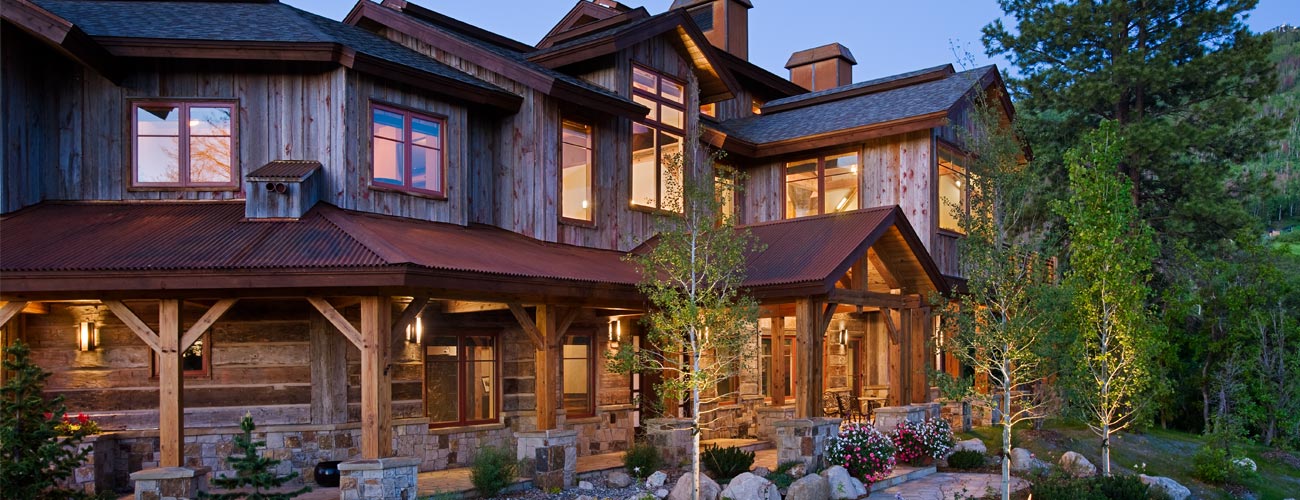
Woodhouse Post and Beam has featured the Trilogy creation “Calecho” on its website referring to it in their Gallery section as a “Dream Home.” Woodhouse, located in Mansfield, Pennsylvania, has designed hundreds of homes and erected as many timber frame and panel house systems nationally and internationally. Choosing this Trilogy creation as a “dream home” certainly puts it on the short list of some of the countries greatest timber frame homes. The home, designed and constructed by Trilogy Partners and Woodhouse Post and Beam, features a gold and silver mining theme and includes an antiqued full timber frame, exterior panel wall system, and recycled flooring and siding materials. It’s located on a majestic lot with tremendous views of the Breckenridge Gold Course and ski area.


Caleb’s Journey Winter Construction

Days like today remind me of the many years we’ve been building great houses in the middle of the winter at 10,000 feet. Last night we got over 2 feet of snow and as I sit here writing the snow is falling, horizontally, as it often does when the wind is howling. This is what they call a powder day. But for those who will spend the day in workboots and not skiboots there’s nothing like arriving at the job site at 7 in the morning and the temperature is below zero. Not optimal working conditions to be sure, especially if we’ve had a dump like the one last night. So the first thing we try to do when building a home in the winter is to get the walls up, and the roof on, and the framing sheathed. At that point at least we’re out of the weather. Unfortunately we still have to deal with winter temperatures. Inside the house “shell” the temperature remains frigid because the shell holds the night’s cold air inside. Hardly pleasant working conditions. Sure, we can and sometimes use portable propane heat, but that’s an expensive proposition. Once the walls are up and the roof on it will be weeks if not months until the plumbers lay down the radiant floor tubing and get the boilers and gas connected to the house so we can have real heat. It’s a hardy bunch of souls that live at this altitude and work building homes through the winters. Though building slows down this time of year, it certainly doesn’t stop. Because folks, it’s winter here 8 months of the year!

When I was in college I worked for a summer in Glacier National Park for the company that ran the grand old lodges at Many Glacier, Lake McDonald, and East Glacier. I loved those magnificent european inspired holdovers from the great Railroad travel era. I was pretty much in awe of the fireplace at Lake McDonald Lodge at the southern entrance to the park. The fireplace opening was so big at 6’6″ tall you could stand up in it. I’d never seen anything like it… and they kept a fire going in it all year round! Now, that’s a fireplace! When it came time to design the Great Room fireplace for the Timber Trails residence, my thoughts returned to Lake McDonald. Online research turned up other inspirations of many shapes… perhaps cousins if only in size to the one at Glacier. So inspired, we put pencil to paper and came up with this fireplace which, although large enough to stand up in, is sized and shaped to best compliment the room in which it stands. Benches on either side of the fireplace will provide a wonderful warm niche on a snowy day. Even though this fireplace is an original design, its inspiration is firmly rooted in the past. In design, nothing is truly new and credit is always to be shared with those who came before.

In the design world, because there are an infinite number of options and choices, choosing just the right item for the right purpose sometimes feels downright overwhelming. But from the beginning we thought a hefty carved stone sink would be perfect for the kitchen in the Timber Trails residence in Breckenridge. The theme of the house was European Castle reconstructed after World War II (yes, every house has a story) and this sink, or one just like it,  seemed to balance well with the massive rafters and beams and stone walls that would surround it. But because we were building this house to LEED “Sustainable” standards, we needed to source the sink from as close to Colorado as possible (LEED encourages local purchasing to reduce the environmental impact of shipping.) So, after some searching, we sourced this sink from Mexico, which is certainly closer to Colorado than Europe or Asia, which were other options. Sometimes choosing the “right” thing means more than just form and function. Especially if you are as concerned as we are about designing and building in a way that is friendly to the planet.

About a decade ago my brother and I bought 2 lots in the Highlands Development in Breckenridge. On one of them we decided to build a spec home.  We needed a design concept and the one I came up with involved a story. After all, I did come from the movie business, and a good movie (or project) always begins with a good story. The story of this house would be this:  Once upon a time around the early 1900s a man named Caleb (don’t ask me why his name was Caleb, it just popped into my head) decided to build a home for himself. He’d been building homes for other people all his life, and now it was his turn. Caleb was a saver. Over the years after each project he had taken the leftover materials, beams, siding, boards, and saved them in a big pile behind his tiny cabin. Until one day he decided he had enough of these leftovers to build an entire house.

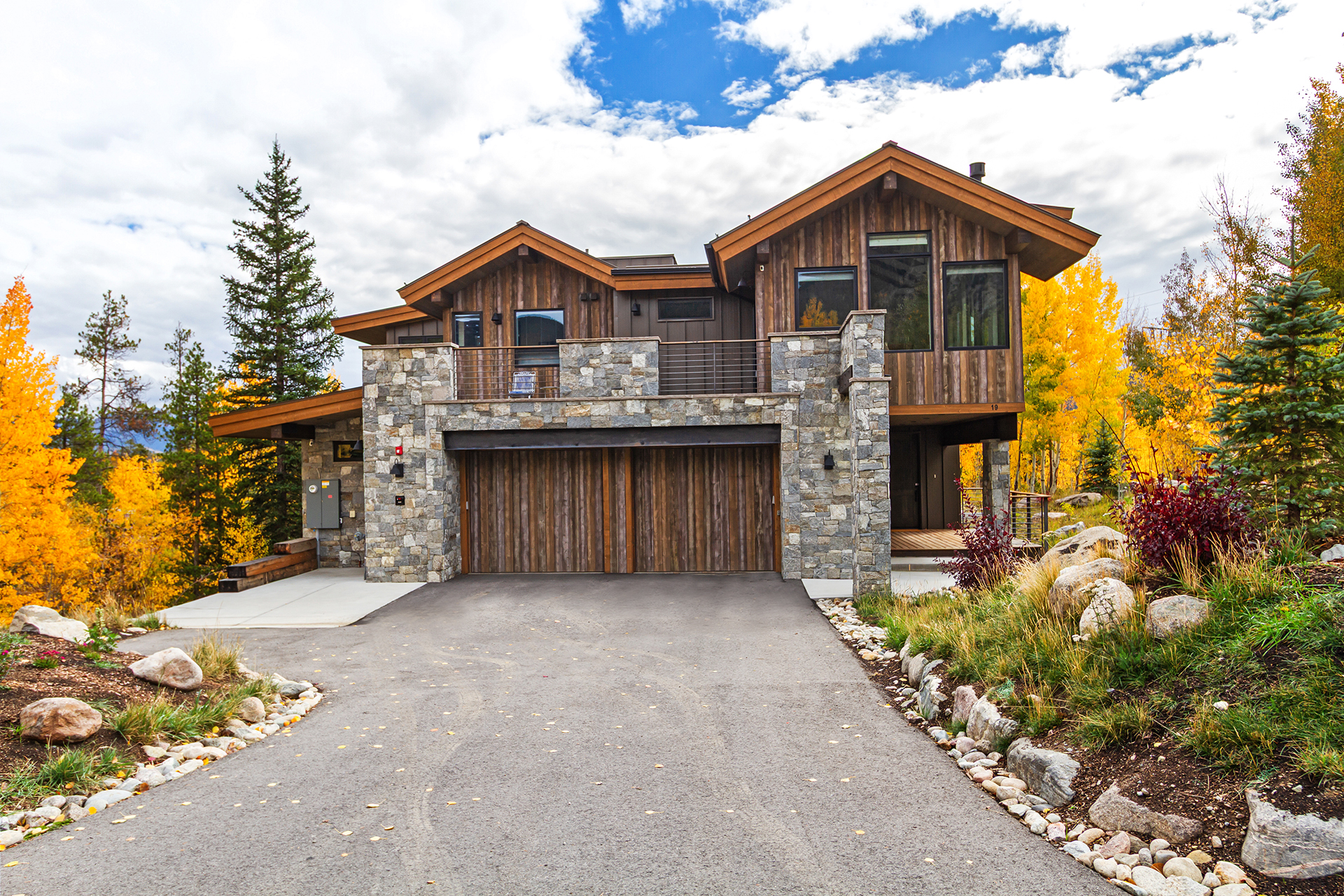
So, with Caleb’s Journey I first began to design and build using reclaimed and recycled materials. The result was fantastic. Not only were we doing something good for the environment, but the reclaimed siding made the garage doors look fantastic and truly original.  The reclaimed flooring and ceiling cladding gave the interior great depth of character. I’ll talk more about my use of reclaimed materials in later postings, but here’s some photos of the home we called Caleb’s Journey.

965 N Ten Mile Dr. , Unit A1 Frisco, CO 80443
Phone: 512-413-2593

Email: gregb@trilogybuilds.com
Facebook: TrilogyPartners
Twitter: @trilogybuilds
Instagram: trilogybuilds
Youtube: The Trilogy Partners Channel