By Benjamin Genocchio | Over the seven decades of his long career, Frank Lloyd Wright created some of the most innovative buildings of the 20th century. But advances in building materials and digital design technology — and his worrying, even megalomaniacal vision of architecture as a tool for social transformation — have gradually caused the field of architecture to move beyond his shadow. Wright always insisted architects should not confine themselves to merely designing pretty buildings. He believed architecture was “the mother of all arts” and could transform the world.

Herein lies the paradox of his career: he was a visionary figure whose ideas were often so radical and ambitious that they seemed impractical, even dangerous. Throughout his life writers remained suspicious of his intentions, colleagues regarded him as a crank, and clients went around the twist at his utter disregard for agreed-upon budgets and specifications. Wright always knew better; it was just a matter of time before he could convince you of your error. And yet he left a legacy of buildings second to none in American architectural history.

The Milwaukee Art Museum’s exhibition “Frank Lloyd Wright: Organic Architecture for the 21st Century” marks the centennial of Taliesin, Wright’s legendary, scandal-plagued hilltop home and summer studio in the midst of farmland about 40 miles west of Madison. It is a decent media hook for a Wright show, and the display is housed in a pleasant setting: the Quadracci Pavilion, designed by Santiago Calatrava and opened in 2001. There is a definite poetry to seeing a great architecture exhibition in a dazzling piece of architecture.

Such a contemporary setting is also something of a risk, as the show is expressly conceived to convince us of Wright’s enduring importance as an architect. It does not completely succeed, for reasons that I think have more to do with him than the choice of exhibits, or organizational structure. Wright hated cities, and most of his ideas about urbanism remain as impractical today as they were half a century ago. For example Broadacre City, his grand vision of suburban planning, called for every family to have at least an acre of land.

Nonetheless the show’s multiple curators — Frank Lloyd Wright Archives director Bruce Brooks Pfieffer, archives curator and registrar Margo Stipe, Milwaukee Art Museum chief curator Brady Roberts, and Phoenix Art Museum director Jim Ballinger — make the argument that Wright’s idea of organic design, in which architecture, simply put, responds to the local terrain rather than dominating it, presages today’s enthusiasm for sustainability and green architecture. The range of projects presented in the exhibition, familiar to anyone with a working knowledge of Wright’s career, suggests that Wright’s vision of an organic architecture was indeed surprisingly adaptable and sustainable.

In fact, the more challenging the terrain, the more creative and inventive Wright became. Think of “Falling Water,” built in 1936 over a waterfall and connected with nature in a profound way, or the “Raul Bailleres House,” commissioned in 1952 for a rugged clifftop location in Acapulco, Mexico, but never built. The design takes its primary cues from — and incorporates — massive circular boulders in the landscape. A steeped terrace down to the sea is also elegantly and sensitively integrated into its surroundings.

But the question remains: how much of the architect’s enthusiasm for natural local materials and sensitivity to site was a product of his old-fashioned, hardy outdoor upbringing in 19th-century rural Wisconsin — Wright was born in 1867 and raised on farmland settled by his Welsh ancestors — and how much of it was a forward-looking and visionary gesture concerned with environmental sustainability? Wright certainly revered nature throughout his life, despite the very modernist grammar of his designs.

It is not easy to approach Wright in a new way, given the volume of literature about him and his career and the abundance of past exhibitions and museum catalogues devoted to his designs. The present show covers a lot of familiar territory, which is probably inevitable, though happily includes 33 design drawings borrowed from the Frank Lloyd Wright Foundation that have never been publicly exhibited. (The drawings are among 100 works on paper that make up the majority of the show, about two thirds of the exhibits

I am not sure I believe Wright was a pioneer of sustainable architecture: he was never averse to using re-enforced concrete, a material that he helped to pioneer. (The Guggenheim museum, completed in 1959, is an example.) But I do believe the curators are correct in their belief that there is something valuable to be learned from Wright’s designs, something relevant to our time. And yet I can’t put my finger exactly on what that is. Perhaps it is simply attitudinal.
Source: Artinfo.com

According to the U.S. Department of Energy, weatherization protects a building and the interior from the natural elements, particularly from sunlight, precipitation, and wind. Weatherization also modifies a building to reduce energy consumption and optimize energy-efficiency.

Weatherization Tasks

From the results of the energy audit you should know what areas of your home need to be addressed. Focus on correcting those issues first, then move on to other areas as needed.

  • Sealing air leaks around windows and doors with caulking or weatherstripping.  Also seal around recessed can lights in the ceiling, as these may be leaking conditioned air into the attic.
  • Sealing ducts with mastic, not duct/duck tape.
  • Installing or replacing exterior materials, such as roofing, siding, and skylights, and making sure they are in good working condition.
  • Installing insulation in walls, floors, ceilings, around ducts, pipes, and water heaters.
  • Installing storm doors and windows.
  • Replacing doors and windows with energy saving newer models.

Weatherization Benefits

Saving energy is one of the main pluses of weatherization. Sealing air leaks and improving insulation result in more efficient conditioning of the indoor environment. Lower energy use means lower energy costs, so there is direct payback from energy savings.

Many states have weatherization programs that help low income households receive free weatherization services from approved contractors. With less money being spent on heating their homes, these families can then spend more on other essentials.

Government programs exists to help out those who are seeking home weatherization. The government provides this state-by-state guide (PDF).

As for the big picture, upgrades can lead to reduced dependence on foreign oil and lowering the amount of greenhouse gases emitted. This is good for both the economy and the environment.

Source: Energy Star, Planet Green

Photo courtesy of OERB.

Source: Greenbuildingelements.com

New reports have revealed that the remodeling industry is bouncing back and is ahead of the building industry in the recovery curve. According to Builder magazine, national spending on remodeling reached $300 billion in 2010, as reported by Harvard University’s Joint Center for Housing Studies.

The report offers predictions that remodeling spending will increase at a rate of about 3.5 percent this year and in the years to come. While that is below the 12 percent annual pace of the housing boom that occurred from 2003 to 2007, it is quite higher than the downturn from 2007 to 2009, in which remodeling spending dropped by nearly 13 percent.

Gwen Biasi, spokesman for the National Association of the Remodeling Industry, said “It’s picking up somewhat out there. We’re hearing from members that their phones are ringing again and people are coming up with money for remodeling projects. The project aren’t as huge as they might have been five years ago, but [remodelers] are seeing an increase.”

Perhaps this news is a sign that the building industry will see an increase in spending in the next few years, too.

Photo credit: Nchsa.org.

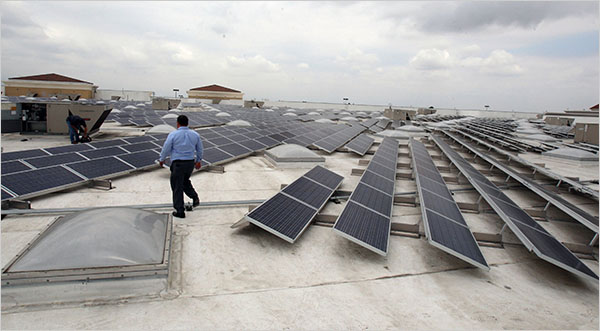
Architectural feats of our day are no less than marvels. But among the most breathtaking spectacles are the practical green buildings that are becoming more and more prevalent in our communities. Efforts for environmentally friendly architecture have resulted in a vast array of simple and affordable building techniques that are adaptable to almost any building type. Ideas like white roofing, organic insulating, and the use of high efficiency windows are a few of the simple moves making a huge impact.

The roof of a Wal-mart store in Chino California

White roofs
As we know, light colors, especially white, reflect heat while dark colors absorb it. Today, white roofs are catching on as an integral part of the green architectural movement, and an attractive alternative to traditional dark toned roofing materials. These cool-roofs can cut household cooling costs by 10% every year, meaning energy bills are slashed and energy use is reduced. Though these roofs may not be ideal for cities that have harsh cold winters, due to increased heating bills, they are perfect for homes that spend more on cooling than heating. Even large international corporations like Walmart are utilizing white roofs to help curb their energy consumption and make their operations more environmentally friendly. It is a relatively affordable and easy to apply tactic.

Recycled Denim Insulation

Organic insulation
Living with old insulation is not only expensive and less efficient, it is also dangerous. Asbestos is a carcinogen that can often be found in old insulation. This toxin can cause a cancer called mesothelioma. Symptoms of mesothelioma often lie dormant for 20-50 years and mesothelioma life expectancy rates are extremely low. One sure way to avoid mesothelioma and to simultaneously reduce energy costs is to use organic insulation. Sheep’s wool and cotton insulation are toxin free and prevent the accumulation of moisture indoors. Not only does this remove harmful toxins, this also reduces the chance of bacteria and mold-related illness. There are many products available including recycled denim insulation, that are affordable, organic, and high performance. Another option is to explore the use of straw bale insulation which is growing in popularity.

High efficiency windows
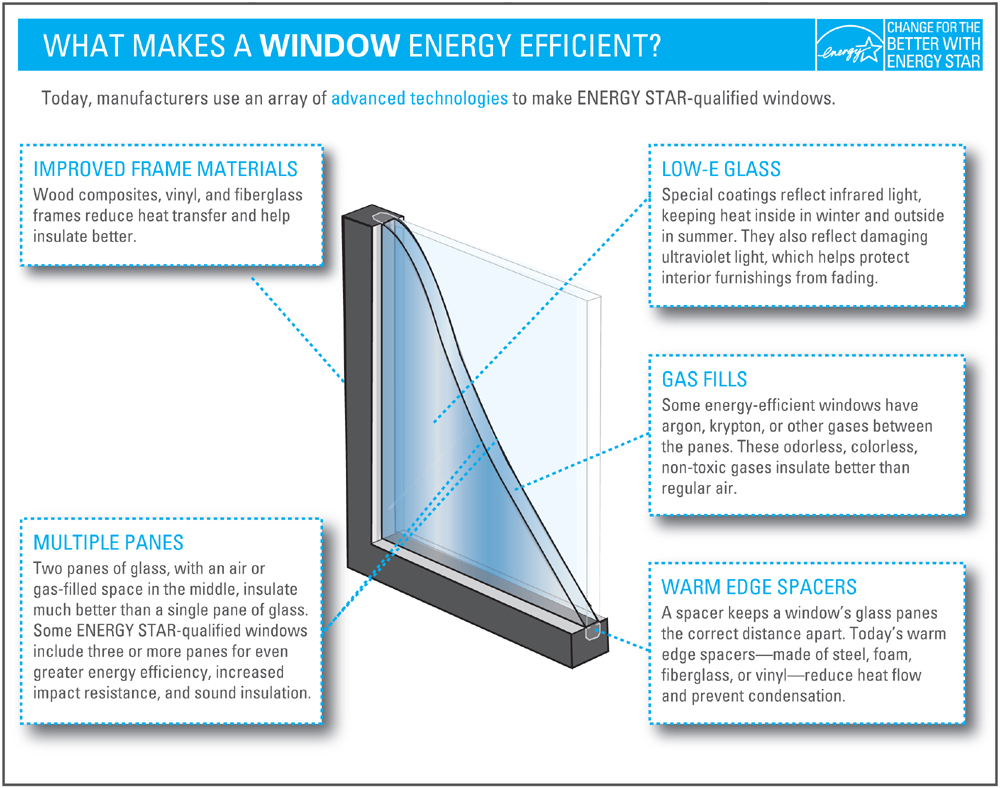
High efficiency windows by Energy Star and other popular green companies also help to reduce energy costs. These windows use double or even triple glazing techniques and low e-coating to trap heat and to increase coolness respectively. Also, the materials used to frame the windows can reduce heating costs by not conducting heat. Using wood, vinyl, and fiberglass frame windows is preferred over the commonly used aluminum, while it’s also a great idea to insulate the window frames.

To reduce energy waste, to cut energy costs, and to avoid occupant health issues, it is advisable to consider green architectural techniques for your home or business. Using white roofs, installing organic insulation, and upgrading to high efficiency windows are great, affordable, ways to take steps towards a greener and healthier future while combating devastating climate change.

From Talkitech.com by Krista Peterson

Wendy Koch, USA TODAY

USA TODAY

Just how tough is the passive house standard that’s starting to catch on in the United States? I put my own new green house to the test.

My house, nearing completion in Falls Church, Va., wasn’t designed to meet the rigorous passive standard, which focuses solely on energy efficiency, but rather the top rating of a more general program by the U.S. Green Building Council. Yet it has many of the same features of certified passive homes, so I figured: why not try?

After all, my project has high-performance windows by Serious Mate rials, a well-insulated and sealed exterior (we used structural in sulated panels or SIPS) and ultra-efficient appliances and lighting (only LEDs and compact fluorescent lamps.) Really, how hard could it be?

John Semmelhack, a passive house expert in Charlottesville, Va., who runs the Think Little consul ting firm and advised on how to make a Waldorf school meet the passive standard, agreed to do a preliminary analysis of my project for this story. I anxiously awaited his results.

He let me down gently. “While the house is going to be a very energy efficient house, it’s not going to meet the Passive House standard,” he wrote in an e-mail that reported his findings. He explained them in a phone interview.

“The biggest problem by far is your windows,” he said. My house simply has too many of them, and the large south-facing windows don’t capture enough solar energy because of their glazing and less-than-optimal siting. (To get the perfect southern angle, the house would have needed to sit diagnally on the lot, which would look odd.)

Windows absorb more solar power if the glass has a high “solar heat gain coefficient” or SHGC. But since we have a shady lot and the U.S. government’s Energy Star program doesn’t recommend high SHGC windows for the Mid-Atlantic region, we didn’t request such glazing.

The second biggest issue, Semmelhack said, is the home’s geometry. It’s not a simple cube. My L-shaped home opens to a south-facing courtyard, so it’s more spread out than a colonial or a foursquare, which is an easier shape to make energy efficient. Its top floor also overhangs the main level in both the front and back, which looks cool but creates potential thermal breaks.

Semmelhack said the home’s foundation, walls and windows could also have benefited from a bit more insulation, but he said we didn’t miss the mark by much.

He said the Mid-Atlantic is a tricky place to do a passive home, because “we get a little bit of Maine and a little bit of Florida.” Homes certified by the Passive House Institute US, a private Illinois-based group, need to have annual heating or cooling loads be low 4,750 British thermal units per square foot of interior finished space, which is about 10 times less than many regular new homes.

Semmelhack figured my heating load was about twice the passive standard while my cooling load was about 30% higher. My home’s overall energy use was about 20% higher than the standard’s maximum of 38,000 Btu per square foot of interior finished space per year. He said we could opt for a slightly more efficient Rinnai tank less water heater, but the conventional Carrier Infinity heating and cooling system we selected is just fine. “It’s about as good as you can get,” he said, noting its 95% efficiency rating.

The passive standard also requires homes be virtually air tight, limiting the air changes per hour (at 50 pascals) to 0.60, which is a fraction of what the Energy Star program al lows.

I don’t know yet how well my house will fare on this measure, because we haven’t done our final blower door test. But my builder, Arjay West of West Properties, did preliminary checks before enclosing the walls in drywall and tried to address any thermal breaks. Since my house isn’t a simple cube, though, sealing it is more of a challenge. We’ll keep you posted on our progress.

Source: USA Today

Would you like to receive the latest updates and information from the Trilogy Partners blog in your e-mail inbox? If so, subscribe to our blog today and you’ll receive our blog posts right in your inbox. Our posts cover in-depth topics related to sustainable homebuilding, architectural and interior design trends and ideas, as well as the latest news and information from the construction and real estate industries and our work with the Haiti Orphan Rescue Program.

To subscribe, simply enter your e-mail address in the subscription box located on to the right of this post, and then keep an eye out for a subscription confirmation e-mail. The subscription confirmation e-mail will have instructions included to activate your subscription, so be sure to follow those directions. Once your subscription is confirmed and activated, you’ll begin to receive our updates in an e-mail from Google’s Feedburner each time we post new information on the blog. You can read the post in your inbox, or visit our site directly.

Look for this box to the right of this post and enter your e-mail address there to subscribe to our blog!

Subscribing to the Trilogy Partners blog is a great way to keep in touch with all that’s going on with us! We hope you’ll connect with us through our blog!

We at Trilogy Partners were very proud when the kitchen we designed with the assistance of Kathye Conti made the cover of Timber Home Living Magazine. This kitchen had proved quite a challenge indeed. From the beginning we were dealing with a bit of a tight space. Still, we needed to create a kitchen suitable for pros. This kitchen would feature two sinks, Dacor appliances including a 48″ Fridge, 2 dishwashers, microwave, cappuccino  maker, a wall oven and a 36″ Range with convection oven.

Perhaps the biggest challenge however was that during construction we discovered that we had no way to vent the range hood. A downdraft vent would not work with the range oven we had chosen, and venting upward would mean our vent pipe would perfectly bisect a roof valley. This would certainly cause the roof to leak, if not this year, then next. After studying the problem for a week, we decided we really didn’t want to build a chase to hide the vent pipe. We instead came up with a far better, albeit unorthodox, solution.

As the photos show, we left the vent pipe exposed, ran it across the ceiling, and used it as the structure for a hanging pot rack.  A problem had been solved and the solution became one of the highlights of Caleb’s Kitchen.Caleb's Kitchen on the cover of Timer Home Living Magazine

A solution good enough to make the cover of Timber Home Living magazine.

Toxins. Volatile Organic Compounds. Off-gassing. Ten years ago, these terms made their way into our mainstream vocabulary. And for good reason.

People were beginning to realize many materials used to build our homes were toxic and caused adverse health effects. Volatile Organic Compounds — or VOCs — in carpets and furniture, evaporate and release harmful toxins into the environment, a process that can happen over a period of years after products are initially installed. Because we spend about 90 percent of our time indoors, exposure to chemicals such as formaldehyde can trigger headaches, allergies, respiratory problems, and damage to nerves, the kidney and liver — to name only a few symptoms.

The Environmental Protection Agency says the biggest VOC offenders are in adhesives and sealants, paints and coatings, carpet systems, composite wood and laminate adhesives, furniture and seating.

Needless to say, more and more people are demanding safer materials for their homes and, although it has taken a while, the building industry is signing on to the “green” trend.

“In the past three years, there’s been a drastic change and green has become more popular,” said Kate Dayton, consultant and owner of Green Courage, a New Paltz-based company that sells environmentally responsible materials and supplies. “People want it — even if they are not chemically sensitive. The whole purpose is to offer customers more healthy options.”

Consumers educating themselves about environmentally safe materials for their homes are on a parallel path with builders, contractors and architects. They’re even slightly ahead. The path means weaning oneself from toxic, oil-based paints because they contain harmful petrochemicals that can be absorbed through the skin and scalp, affecting human organs and tissues.

Water-based latex paint is somewhat safer, although some use as many as 15 percent chemicals that emit solvents after being applied. Mildew-resistant paints can emit toxins because they use fungicides such as arsenic, disulphide, ammonium compounds or formaldehyde.

A green option for both is to use low VOC or “zero VOC emissions” paint, which is odorless and costs about the same as known brands. But the paint industry is also starting to produce less-toxic paints that are sold at most home building stores. It’s a good idea to ask for solvent-free or odor-free paints and to check out the labels.

Naomi Sachs, a landscape architect who lives in Beacon, renovated her house with recycled items. (Karl Rabe/Living)

If you’re considering wallpaper instead of paint, you might want to re-think it. Wallpaper is coated with PVC, commonly known as vinyl, and is composed of poisonous chemicals that emit gases, causing major health risks, including cancer and birth defects. Because of the toxic adhesive backing, wallpaper also emits VOCs. But, as with the low VOC paints, there are wallpapers that use low VOC and non-toxic glues.

However, another problem with wallpaper is that because vinyl isn’t porous, it traps moisture underneath the surface — a ripe environment for dangerous mold in humid climates.

And what about floors? The favorite low terrain of babies, kids and pets can also send out a batch of harmful chemicals. Carpeting uses many materials from petroleum-based sources that emit VOCs used in the padding, backing and in the carpet itself. Carpet also harbors all sorts of dirt, dust, pollen and other allergens that are hard to remove and contribute to poor air quality.

There are some greener carpets made from recycled materials such as jute backing, instead of PVC, or recycled Polyethylene terephthalate bottles.

In fact, many carpet manufacturers have “take-back” programs in which they recycle your old carpet with different types of non-chemically treated fibers. HealthyStuff.org, a nonprofit group that reports on toxic chemicals and government regulations, found many residential floors contain heavy metals, chemicals and other additives such as lead, cadmium, flame retardants, tin compounds and phthalates. The harmful chemicals are linked to asthma, reproductive problems, developmental and learning disabilities, hormone problems and cancer. Floor products that don’t contain dangerous substances are cork, bamboo, hardwood and linoleum.

“Some people think linoleum is vinyl, and that’s not true,” said Gina Porcelli, an interior designer based in Rosendale. Porcelli teaches college-level courses focusing on green materials and energy usages.

“Linoleum was the original flooring in the 1940s and was installed in New York City subway cars. Today it is a completely green product, and it’s making a comeback.”

For homeowners wanting to install wood floors, Porcelli suggests they check out flooring certified by the Forest Stewardship Council for wood that comes from a forest maintained for sustainability. The council is one of many certification programs that have surfaced to provide environmental information on products sought by home owners.

Architect Rick Alfandre says wood for flooring or for cabinetry should not only be council-certified but be environmentally harvested.

“There is a certification for healthy indoor air products, particularly for wood products,” said Alfandre, owner of Alfandre Architecture, P.C. in New Paltz. “You want to know where the material comes from and you can ask cabinet suppliers what their process is regarding healthy indoor cabinets.”

Alfandre, who has been in the construction industry for 30 years, says if you are in the market for “green” cabinets, stick to solid wood and plywood rather than particle board, which uses harmful chemicals in the glue.

Wood with urea formaldehyde is particularly dangerous because it is an unstable chemical that emits gasses for a long time. Cheap to manufacturer and colorless, urea formaldehyde is used in many building materials, such as the popular wood particleboard otherwise known as MDF, or medium-density fiberboard. Emissions can cause headaches and respiratory ailments.

In 1998, the U.S. Green Building Council, a nonprofit trade organization, was formed specifically to promote sustainably designed buildings. The council is known for developing the Leadership in Energy and Environmental Design, a green building rating system that fosters a holistic approach, from how building materials are made to how they are disposed of.

“It’s called the ‘cradle-to-cradle’ theory,” said Richard Miller, a New Paltz-based architect. “It’s what happens to the product all the way through its life, especially how we dispose of them and put them back into the environment. Many of the dangerous chemicals in building materials go right into the groundwater, water you are drinking.”

Miller is big on re-using materials that might otherwise be dumped into the landfill.

“We have made counters out of former bowling alleys and sometimes use old barn siding. We also buy wood from local mills or use trees that are on the homeowner’s property.”

Naomi Sachs, a landscape architect who lives in Beacon, renovated her house with recycled items, including a used stove and bathtub from Hudson Valley Materials Exchange.

We tried recycled lumber from a building that was being demolished and for the inside we used low or no VOC paint,” she said.

Sachs decided to spring for a long, 14-foot stainless steel countertop because “it’s durable, not like a vinyl counter and it will last forever. If we ever decide to change it, it is recyclable.”

Sachs describes her renovation as an “adoptive reuse,” and praises the building industry for becoming environmentally conscious.

“It’s healthier not only for us to use products with little or no off-gassing, but think about the people who have to work with this stuff to begin with,” Sachs said.

Using less toxic materials in our homes requires a certain vigilance. Porcelli said there is a lot of “green washing” from manufacturers wanting to sell a product that might not be truly safe, but who are misrepresenting the product’s true nature. She suggests people read labels and not be afraid to ask if the product is recycled or how and where it was made.

“If it’s made in a place as far away as China, you may want to think twice about the amount of fossil fuels that were used to get the product to you,” she said.

Identifying a safe product can be tricky not only for consumers but for architects and contractors in the field, Alfandre said. “You (the manufacturer) can slap a green picture of a leaf, call it green, and it won’t mean anything.”

The real problem is that, to date, there are no national standards or legislation that forces companies to use safe materials. President Barack Obama signed the Federal Buildings Personnel Training Act requiring federal building managers and contractors to participate in green building training so they can better manage sustainable government building

In 2010, two bills were introduced in Congress aimed at improving the safety of toxic chemicals and reforming the 34-year-old Toxic Substances Control Act. Under the current act, the EPA can only test for chemicals that have been shown to have health risks.

The Toxic Chemicals Safety Act in the House and the Safe Chemicals Act in the Senate would give the EPA the teeth it needs to require safety testing of all industrial chemicals and force businesses to prove chemicals are safe before using them. The bills are scheduled to be re-introduced this year.

“We want the onus to be put on the government to ban more chemicals used by manufacturers,” Dayton said. “That will take some strong policies. Now, there is no system in place to require testing for safety. These bills will change the industry. Builders don’t have to worry about the safe, conventional materials they are choosing and can be confident about the materials’ quality and integrity.”

Abby Luby is a freelance writer in the Hudson Valley. She can be contacted atabbylu@abbylu.com

Source: PoughkeepsieJournal.com
You may recall that a few days ago we told you that the U.S. Green Building Council (USGBC) named Denver the “greenest” city in the U.S. Just a few days ago, the USGBC released the list of the “Top 10 States for LEED Green Buildings,” and we are excited to see that Colorado placed in the top 10!

The USGBC based the list of the top 10 states for LEED certified buildings per capita on information collected from the 2010 U.S. Census, according to a USGBC press release. Scot Horst, the USGBC senior vice president of LEED, said “Using per capita, versus the more traditional numbers of projects, or pure square footage, is a reminder to all of us that the people who live and work, learn and play in buildings should be what we care about the most. 2010 was a difficult year for most of the building industry, but in many areas, the hunger for sustainable development kept the markets moving.”

The top LEED states per capita, including the District of Columbia, are as follows:

Colorado is one of the top 10 states for LEED certified buildings!

  • District of Columbia
  • Nevada
  • New Mexico
  • New Hampshire
  • Oregon
  • South Carolina
  • Washington
  • Illinois
  • Arkansas
  • Colorado
  • Minnesota

Here at Trilogy Partners, we’re proud to do our part in creating LEED certified, sustainable, green homes. We think it’s awesome that Colorado placed in the top 10, and we look forward to continue building more LEED certified homes!

Photo credit: U.S. Green Building Council Colorado Chapter.

photo of heavily treed building site

Vacant Land For Sale

This has actually happened. A client contacts us. They want to build a new home. They’re about to close on a lot in a neighborhood development. At our introductory design meeting they  describe to us the kind of house they wish to build. A certain number of bedrooms, bathrooms. Energy effeciency. Passive solar design. Sustainable building. A two car garage. A relatively simple design without complex rooflines. And then we go to the site for the first time.

The site the clients had chosen was steep and in the trees. The building envelope was rather small, and because of height restrictions, the home would have to be built so that it stepped up and down the slope, complicating construction dramatically. Solar gain would be limited by shade and trees that by development covenant could not be removed. The steep lot also made it imperative that we locate the garage up-slope and to the front of the home so as to meet requirements that stipulated the maximum slope of the driveway at 7%. Expensive retaining walls would also be necessary. As much as we at Trilogy enjoy a challenge, we had to tell the clients that the lot they had chosen was not conducive to building the rather simple, super energy efficient home they were seeking. The clients did not take this news well for they loved that this lot was adjacent to community open space. They purchased the lot and hired another architect. About a year later the lot was back on the market, I suspect, because the clients had finally discovered for themselves how difficult a lot they had purchased.

Building in the mountain regions often means dealing with slope and trees. But even when the lot is relatively level, the site can still have an enormous impact on budget and design. Today, modern design and technology allows us to create passively energized, super insulated homes with dramatically decreased energy consumption.  But if the lot orientation is north or if the lot is shaded then energy costs will necessarily increase. Views are always a concern and in some developments, homes are built without taking into account that the vacant lot next door won’t always be vacant and views may be impeded when the neighbors build. Other subdivision and local government codes can also severely limit design opportunities. Some neighborhoods put limits on the amount of glass, or the use of solar panels, limiting the use of sustainable energy resources.

Which is why, if at all possible, the Trilogy Design Team likes to assist our clients in the selection of the site for their new home. If the lot is indeed going to constrain design, it’s a great idea to have the design and build team assess exactly what those limitations are going to be.

What would be the ideal site for the home of your dreams?

965 N Ten Mile Dr. , Unit A1 Frisco, CO 80443
Phone: 512-413-2593

Email: gregb@trilogybuilds.com
Facebook: TrilogyPartners
Twitter: @trilogybuilds
Instagram: trilogybuilds
Youtube: The Trilogy Partners Channel